Showing posts with label Ashfall. Show all posts

The Value of Author Visits

Author visits can take a lot of time to schedule and prepare for. Teachers, school administration, and parents aren't always supportive. Some argue they aren't "curricular." (This isn't true. Unless writing isn't part of your curriculum. In which case your school has bigger problems than the lack of author visits.) They can be expensive.

On the author's side of things, they're exhausting. They take time away from writing. They can be a nice source of extra income, but for a new author like me, the income isn't very significant.

So why do we bother? Why do some librarians spend dozens of hours of their own time scheduling and preparing for author visits? Why do some English teachers take the lead in those sad schools that lack a librarian? Why have I done more than 200 author visits for free over the last year? (I charge now, although I'm very cheap.)

A student recently answered all those questions for me via email. I've asked for, and received, his permission to share the email with you. I've changed his name to protect his confidentiality. Otherwise the email is exactly as he wrote it:
My name is Fred. About a year ago you visited Cedar Rapids Iowa. You made a stop at the Linn County Juvenille Detention Center and i was a resident there. ever since you visited i have been big on writing. but just not stories. i have written alot of poems and different raps about my life. i was wondering maybe if i could get some expert advice on how they look. or what are some areas i need to improve. if at all possible i would like to send them to you in the mail and hopefully get some good advice. it was really nice meeting you. if you want to know how my life is going right now i am on my way to completeing an independent living program. i just celebrated my 17th birthday today and im on the road to success. writing has been a big inspiration in my life and with out the visit from you i know for a fact i wouldnt have started to write. i would really like to hear back from you soon. it was great meeting you.

Does anyone believe another high-stakes test would have had this kind of impact on Fred's life? Another reading program? Another teacher evaluation system? The things many policy makers and administrators focus on truly don't matter. What matters are the connections that librarians, teachers, coaches--even visiting authors, make with students and the impact we have on those student's lives. If you're involved in education, do your school and students a service: contact an author--any author--today and schedule what may be a life-changing experience for some of your students.

post signature

How the Lexile System Harms Students

About a month ago, a woman approached me at a conference. She picked up a copy of ASHFALL and asked me, "What's the Lexile on this?"

This question threw me for a bit of a loop. I'm used to being asked what ASHFALL's about, how much it is, or where I got the idea for it. "What's a Lexile?" I asked.


"They use it at my daughter's school," she replied. "To match students with books at the right level for them."

"Oh, like the Guided Reading level." I happen to know about those because my wife's school district uses them. They always seemed a bit idiotic--what reader chooses a book based solely on its reading level? But since at her school they're used as suggestions, not mandates, and take the content of the books into account, they've never really bothered me. "ASHFALL is a Z+ on the Guided Reading level scale," I said.

Here's where the rabbit hole started to get twisty. "We don't use Guided Reading," she said. "We use Lexiles. And my daughter isn't allowed to read anything below 1,000." The italics are mine. You'll have to imagine my angry shouting at a school that won't allow their students to read--no matter what the excuse.

"I'm sure it's fine, then. ASHFALL is a Z+. It's got to be at least a thousand on your school's scale. What does she like to read?"

"She loved The Hunger Games, but the school wouldn't count it. It's too easy for her." (I later looked up The Hunger Games--its Lexile level is 810.)

"A lot of teens who liked The Hunger Games enjoy ASHFALL. How old is your daughter?"

"She's in sixth grade."

"You should read ASHFALL first, then--it depicts an apocalypse realistically. It's very violent. Definitely not appropriate for all sixth-graders."

"That's okay. I just need to know what the Lexile level is. Can you look it up?"

I obliged and found ASHFALL listed at Lexile.com. Its level? 750.

"It's too easy for her, then." The woman walked away as my lower jaw hit the table with an audible slap.

For kicks, I looked up Ernest Hemingway's masterpiece, A Farewell to Arms. Its Lexile? 730.

Is my work more difficult, more sophisticated, or more appropriate for older readers than that of Mr. Hemingway, a Nobel Laureate in literature? Of course not! Think about it: If this poor student stays in her school system, she'll NEVER be allowed to read A Farewell to Arms. It's allegedly too easy for her.

Since this conversation, I've heard of a high school that boxed up all its copies of Night, Elie Wiesel's classic account of surviving the holocaust, and sent them to the elementary school, because it's "too easy" for high school students. It's Lexile is 570.

Shocking as that example is, there's a bigger problem: the Lexile system punishes good writing and rewards bad writing. I'll illustrate this point with an example. Here's the first sentence of a book that sixth-grader would have been allowed to read, a book with a Lexile of 1650:
"ON the theory that our genuine impulses may be connected with our childish experiences, that one's bent may be tracked back to that "No-Man's Land" where character is formless but nevertheless settling into definite lines of future development, I begin this record with some impressions of my childhood."
Forty-eight words that can be replaced by three with no loss of  meaning: 'My childhood was.' This is a truly awful opening, whatever your opinion of the overall work.

Here's a novel millions of sixth-graders have enjoyed. A novel with a Lexile of only 820. A novel this woman's daughter would not be allowed to read:
“They say Maniac Magee was born in a dump. They say his stomach was a cereal box and his heart a sofa spring. They say he kept an eight-inch cockroach on a leash.”
It's clear and concise. It introduces the main character and opens irresistible story questions in the reader's mind. If it were rewritten as one sentence, it would lose the flavor of gossip that makes it intriguing--and have a much higher Lexile score.

Good writing is simple. The best writers never use two words where one will do, and they choose their words with precision. But the Lexile system rewards complexity and obscurity by assigning higher Lexile scores for works with longer sentences and longer words. In short, students forced to use the Lexile system in their reading are being taught to be bad writers. And some are likely being forced into books that will turn them off to reading.

What should you do? If you're a school administrator, teacher, or librarian, quit using Lexiles. I realize your motto isn't, "First, do no harm," but is that such a bad precept to follow? The Lexile system is actively harmful to your students.

If you're a parent, let your child pick books the way you do--based on interest and need. Ask your school to dump the Lexile system. The last thing we need is an expensive program that makes the great work parents, teachers and librarians do--educating our children--more difficult.
post signature

Why ASHFALL Has a New Cover

Three weeks ago I posted about receiving my author copies of ASHEN WINTER in hardback--it's the sequel to my debut novel, ASHFALL. (To summarize the post: squee!) I also got author copies of the paperback edition of ASHFALL with its new cover. Fellow blogger and author Lissa Price (I just called Lissa a fellow. Snicker. Sorry, Lissa!), asked a great question in the comments: why'd the cover change?

To answer the question, let me refresh your memory on what the hardback ASHFALL cover looks like:


I love this cover like Santa Claus loves reindeer. The artwork is a composite of photographs taken and digitally manipulated by Ana Correal--see more of her amazing artwork here. It's perfect for my book--tough, dark, and a little bit foreboding.

So why did it change?

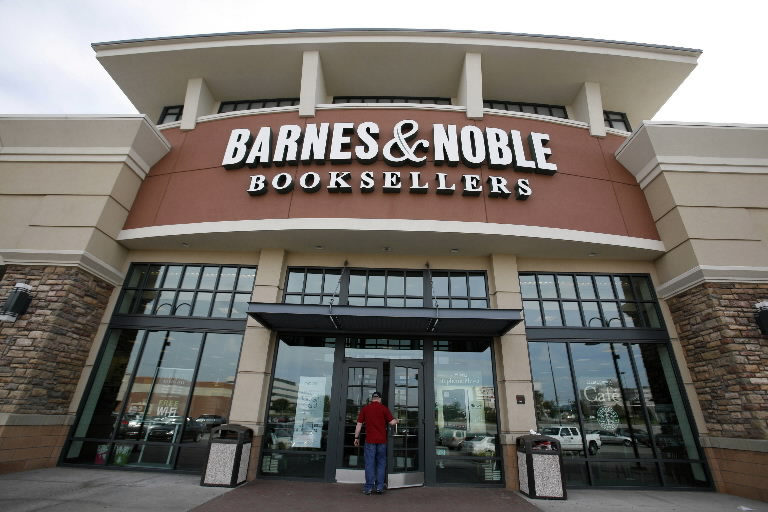
In the world of book sales, there's one retailer that wields a huge influence over covers. Not the biggest retailer, that'd be Amazon. But Amazon carries everything--you can have the worst book cover ever, and Amazon will still sell your book. The most influential retailer of physical books is this one:


As I understand it, there was a rumor that someone at B&N didn't like the hardback ASHFALL cover. That they thought it was too dark and grey--a fair criticism, although life after a supervolcano would be pretty darn grey for a while. I have no idea if the rumor was even true. But here's the thing, B&N is so important to physical book sales, that even the rumor that someone there didn't love the cover was enough to spur a change.

Does this bother me? Not in the least. Because I got new covers out of the deal:


They're also by Ana Correal. See, more color! I love these even more than Santa Claus loves his reindeer. Even more than he loves reindeer even if he loved them in highly inappropriate ways, which he doesn't, but I'm just . . . oh, never mind.

And that's why the cover of ASHFALL changed. Look for the shiny new covers in a bookstore near you on October 8th!

post signature

Courage, Passion, and Determination

This weekend was a trifecta of writerly inspiration. On Friday night my wife, Margaret, and I went to a dinner sponsored by the Indiana Society of Children's Book Writers and Illustrators. I sat next to Alina Klein, whose debut young adult novel, Rape Girl, came out last year. So of course I dragged my copy along and bugged Alina for her autograph.


Rape Girl is an amazing book, one that belongs on your shelves alongside books like Speak by Laurie Halse Anderson and Scars by Cheryl Rainfield. But what I find most inspiring about Rape Girl is the fact that it exists. You see, it's loosely based on Alina's own experience as a teenage rape survivor. (A fact she discusses in the author's note at the back of the book.) I can't even imagine the courage it took to write this book.

I've been kicking a blog post around in the back of my brain for more than a year--one that would deal with my middle school experience with child molesters--but I can't summon the courage to write it. Yes, I break concrete blocks with my bare hands, but I'm a wimp compared to Alina. It takes real courage to write.

Saturday night Margaret and I went to see Big Bad Voodoo Daddy at Conner Prairie. I guess you'd call them a swing/jazz band.


What amazed me about BBVD was their passion--they're totally committed to their music and their audience. They break the conventions of their genre: electric guitar in a swing band? Banjo? Sure--they make it work! They play with an infectious abandon--if the Greek god Dionysus returned to earth, these guys would play for his procession.

As I enjoyed the music, I thought: this is how I want to write, with a wild disregard for everything but the words and my audience. I want to write words that unleash an irresistible flood of emotion, words that inspire laughter, dancing, or tears. It takes passion to be a writer.

Sunday was a day for yard work at the Mullin home. I bought two cubic yards of hardwood mulch to spread across the flower beds in our front yard. As the attendant at the garden center cut into the pile of mulch with his front-end loader, I noticed it was smoking. Even an hour later, the mulch in the back of my pickup truck was hot to the touch.

Unloading that much mulch from the truck to the wheelbarrow to the flower beds is a lot of work. My score? Five blisters formed, one popped. As I turned up yet another spadeful of black mulch, a spot of green rose to the top. It was an acorn, still a beautiful light green color despite its sojourn in the smoking mulch pile. I have no idea how long it had been buried there or how it escaped being ground to mulch, holding onto its life while all the neighboring twigs and leaves turned a uniform dark brown.

I felt I had a metaphor rather than an acorn on the end of my spade. All writers spend time buried among the thousands of others querying literary agents or struggling to find their readership via self-publishing. A few of us, like that acorn, hang on long enough to be unearthed. It takes determination to be a writer.


My weekend reminded me of the traits I aspire to as an author: courage, passion, and determination. How was your weekend? Let me know in the comments, please.

post signature

Author Copies of ASHEN WINTER!

One of the wonderful traditions of the publishing business is author copies. When your book is published, a box shows up with however many free copies of your work are specified in your contract. In my case, it's twenty.

I'm fortunate to be published by Tanglewood Press, a small, reputable children's and young adult publisher based only two hours from me, in Terre Haute, Indiana. (If you aspire to write for kids or teens, they're a great house to keep in mind. Unlike most publishers, you don't need a literary agent to submit work to Tanglewood.)

So last year when I heard that ASHFALL was in from the printer, I couldn't wait for them to be shipped--instead, my wife and I hopped in the car and picked them up in person.

I'm not sure I can adequately describe the joy of holding the result of three yeas of work in your hands in the form of a finished hardcover book. It doesn't exactly wipe out all the rejections, all the time spent agonizing over the perfect words, or the sleepless nights wondering if anyone will enjoy your book; but it does make all those worries seem less important somehow.

The other thing about author copies? Our cats love them, too. When I got home from Tanglewood, I laid the books out on the bed for a photo, and all three cats had to come check them out.


I figured that this year, when the author copies for my second book arrived, it would be no big deal. Been there, done that, right? Not so much.

When I got home from my taekwondo class Thursday night, there they were. Twenty hardbacks of ASHEN WINTER, and twenty of the new paperback edition of ASHFALL.


It was almost as squee-worthy a moment as seeing the first book. Aren't they lovely? Here's a close-up:


The cats--well, one of them, anyway--were pretty excited, too:


A huge thank you to everyone who bought, read, talked-about, or blogged about ASHFALL. You made the paperback edition and the sequel possible, and I owe my joy to you. Thank you.


post signature

The Costliest Price for Ebooks? Free.

My debut novel, ASHFALL, has become popular enough that it's being widely pirated. Oh. Joy.


For the last week or so, I've been having a remarkably civil conversation via email with the owner of one of the pirating sites. It's not so much that I think I'll change his mind--I'm pretty sure that the next time someone changes their mind due to the internet will be the first--I just want to understand what motivates him to take the considerable personal risk of owning a pirate site.

It turns out that he feels justified in what he does because he believes he is helping authors--he's tasked me with reading extensive selections from Cory Doctorow's writings about the benefits he gets from making his ebooks available for free. Now Doctorow is both smarter and a more accomplished author than I, and I have no doubt that making his ebooks free benefits him. But here's what he gets wrong about the ebook market: an environment in which the value of a book descends to zero hurts both authors and readers. In the long run, the costliest price for ebooks is free.

There's no doubt that copyright laws are in serious need of overhaul. As currently written, they excessively protect corporate interests at the expense of individual consumers and content creators. But the important part of copyright law--of any law, actually--isn't what's written down in the law books--it's the social norms and  habits that follow from the law.

I learned this viscerally during the year I was a foreign exchange student in Brazil. On my way out of the airport in Cuiaba, we slowed nearly to a stop at every green light. I tried to ask why, but my broken mix of Portuguese and Spanish wasn't up to the task. I had my answer soon enough though, as I saw cars ahead of us blowing through the reds at cross streets, full speed. Does Brazil have traffic laws? Yes, but the norm is that traffic lights are suggestions, not mandatory, so every intersection becomes a high-speed game of chicken. And to insure a car in Rio costs about a third of its purchase price every year. A similar phenomena applies to speed limits in the United States. The limit in Indiana, where I live, is 70 mph, but the norm is that people drive 75-80, and most of us tend to get annoyed at those going much slower or faster.

When laws work, they become a benchmark that sets a social norm and creates the habits that govern our day-to-day life. Right now, the social norm is that people who create and publish books deserve to get paid for their labor. Most people make sure the authors they enjoy do get paid, either by checking their books out from a library (which paid for the books) or by buying them.

Could I make more money giving ASHFALL away for free, like Cory Doctorow? Maybe, at least in the short-term. He's right when he says the biggest challenge facing new authors isn't piracy, it's obscurity. But my personal test for whether my behavior is moral or not is this question: If everyone behaved this way, what would the world be like? And if we all pirate books--or even give them away for free--the social norm becomes that books are free. And in a world where authors don't get paid for their work, I (and thousands of other authors) can't continue to write. Such a world would be considerably poorer for readers and writers alike. Which is why the costliest ebooks are free.

By the way, at least one of the sites pirating ASHFALL is charging for it. If you pay anything less than Amazon's price for ASHFALL, currently $8.98, I don't get even a penny.


post signature

Let's Build a New Public Library!

Happy Birthday, America!

To celebrate, how about we build a new library? Last week I posted about libraries being closed and librarians cut--what do you say to reversing the trend and opening at least one new one? Here's how you can help:

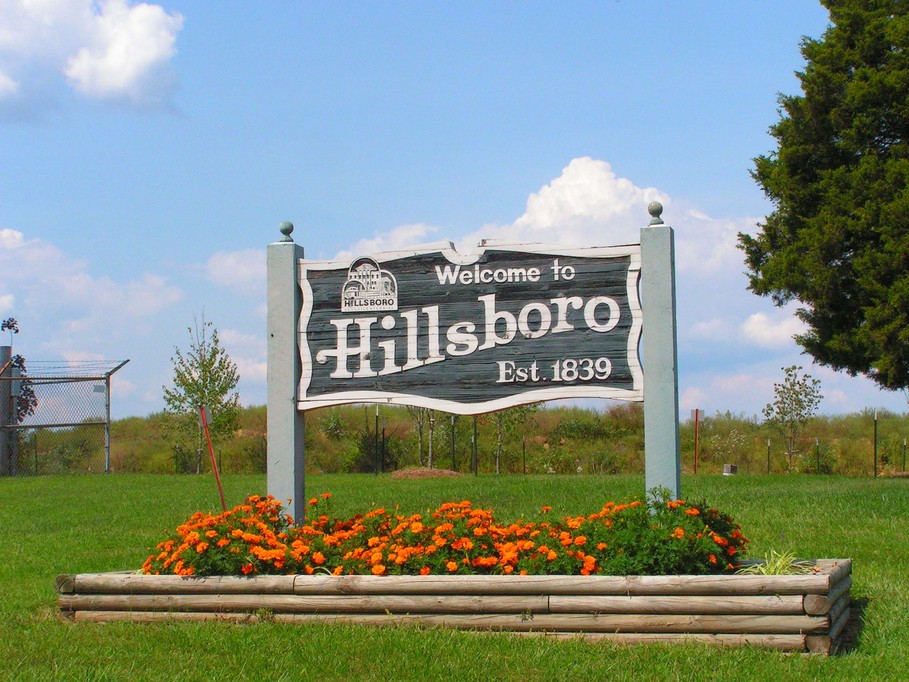
Hillsboro, the seat of Jefferson County, Missouri, lacks a public library. I first became aware of this problem when Deborah Johnson Horn from Barnes & Noble and Karen Creech Huskey welcomed me to Hillsboro High School last November for a fun and exhausting presentation about my debut novel, ASHFALL.  Now Karen is spearheading the next step—her committee has succeeded in placing an initiative to build a public library on the ballot this fall. But ballot initiatives take money to pass (to buy yard signs, posters, newspaper advertising, mailings, etc.), and this is where you and I come in.

I’d like to support this effort in a bigger way than my personal finances allow. And I happen to have a bunch of ASHEN WINTER advanced reading copies (it won’t be out until October!), rare first editions of ASHFALL, and extremely rare ASHFALL  posters (only nine are left). And I'm in the middle of writing the third book of the ASHFALL trilogy, and I think your name should appear in that book, don't you? So I’m holding an impromptu auction. Simply click on the item you want to win, which will take you to the item page on my personal blog, and place a bid in the comments. Top bidder when the auction closes on Sunday, July 8 at 9:00 p.m. EST wins.

1) A rare signed FIRST edition of ASHFALL. The first editions are no longer available in stores.  Includes shipping anywhere in the world at my expense. Bid here.

2) A rare signed, ASHFALL poster. There are only 9 of the ASHFALL posters left.  I'll ship the poster anywhere in the world at my expense. Bid here.

3) An Advance Reading Copy (ARC) of the forthcoming ASHEN WINTER. The book won't be out until October, so you'll get to read it 4 months early! I'll ship the ARC anywhere in the world at my expense. Bid here.

4) Tuckerization in the third and final ASHFALL book (title and release date TBD). I'll include any reasonable name of your choice as a minor character in the third and final ASHFALL book. Bid here.

Rules:

1) All three auctions will be open until 9 pm EST on Sunday, July 8th.

2) Bid by commenting on the item page with an amount and email address. High bid wins. Minimum bid is $10. Bid in increments of $1 or more, please. All bids should be in U.S. dollars.

3) If bids go high enough, I may award multiple copies of any of these prizes.

4) Winning bidders will be informed by email. The campaign to pass the ballot initiative is decidedly local and low tech, so we don’t have a PayPal account to donate to. Instead, if you win, you have to mail a check to:

Campaign Committee for Hillsboro District Branch
of the Jefferson County Library Committee
P.O. Box 176
Hillsboro, MO 63050

Make your check payable to the same--yes, the name is ridiculously long--write small. When they receive your check, they’ll email me, and I’ll mail your prize.

Everything make sense? If not, email me at mike.mullin.writer at gmail dot com, or ask your questions in the comments on this post. Good luck and bid high—it’s for a good cause!
post signature

Quality, Copy-Editing, and Computer Games

My guilty pleasure is computer games. Lately I've been playing The Elder Scrolls V: Skyrim and Civilization V. And yes, that stuff at the beginning of my debut novel, ASHFALL, about World of Warcraft is from, ahem, personal research. I played a shadow priest to level 80 (pre-Cataclysm), before I realized I was getting far too addicted and put massively multiplayer online games (MMOs) away forever. The advantage single player games have is that I can abandon them anytime without guilt. The people your meet in an MMO are real (even the "bots" are usually real people doing incredibly repetitive tasks for a miniscule amount of money), and I didn't always treat them as well as I'd like when my offline life intervened. I can gleefully be a total feces-head to the computer opponents in Skyrim and Civ 5.


Anyway, playing these games has given me a renewed appreciation of the book publishing industry. I know it's become fashionable to deride book publishers (J.A. Konrath routinely throws the Big Six under a bus, backs it up over them, and lights the mangled corpses on fire), but after spending some time with Skyrim and Civ 5, I'm newly amazed at the quality of the product book publishers put out year after year. If you can't find a grammatical error or typo in the first three screens you see in either of these games, you aren't looking very hard. In the multimillion dollar budget for these games, their developers couldn't find the meager funds required to hire a copy-editor? Seriously? And both games have been out for months and been through numerous patches--the "we didn't have time" excuse doesn't cut it any more.

If my admittedly tenuous grasp on reality ever snaps completely, you'll probably find me at Firaxis Games delivering a lecture on the proper use of the possessive at gunpoint. Or at Bethesda Game Studios teaching basic English.

But the real point I want to make is this: the book publishing industry does an amazing job putting out a quality product, year in and year out. I read a lot--become my friend on Goodreads if you want proof, 171 books last year--and it's rare enough to find an error in a traditionally published book that when you do, it sticks out. Grammatical errors in computer games are so common that only truly anal-retentive types (I'm guilty!) notice.

Yes, errors do creep in, even into well-published books. There were four in the first printing of ASHFALL. Given the 2,500+ errors that the copy-editor caught and the 101,000+ words of text, I think that's pretty good. And if you buy a copy of ASHFALL today, you'll get the fourth printing, which is, as far as I know, completely error free.

The book publishing industry could teach game companies a lot about quality. Maybe they could arrange a trade? Game publishers would learn about copy-editing, and book publishers would learn about marketing. But that's a rant for another day.


post signature

Ashfall, Ashen Winter, and Oral Surgery

I'm off to the oral surgeon today. One of my molars has been missing for six years, but until I got my first royalty check in February, I had lacked the funds to replace it. I'm told they're going to drill a hole in my bone and jam a titanium screw into the hole. I can't say I'm looking forward to that, but it'll be nice to have all my teeth again. Maybe I'll have Alex and Darla engraved on it, like this guy did:


Or maybe an ASHFALL cover would look better? I could put my two two books side-by-side like this on the new tooth and the one next to it:


I got this lovely screen printed cake at Appoquinimink High School, and if they can screen print cakes, why not teeth, right?


 On second thought, maybe I'll just settle for naming my new tooth. It'll be named ASHFALL, of course.
post signature

East Coast Tour for ASHFALL

I'm starting the third week of an east coast tour for my debut novel, ASHFALL. I visit high schools, junior highs, libraries, and booksellers and give a talk that's part taekwondo demonstration, part reading/writing revival meeting, and part geology horror show. Here are a few pics from my talk last week at St. Francis Prep in Queens:


From watching my talks, you'd probably conclude that I'm the biggest extrovert in the world, but in fact the opposite is true. I much prefer home, solitude, and my small circle of friends to meeting new people every day and psyching myself up to give great presentations. So yesterday I was feeling pretty exhausted and depressed. Asking myself fruitless questions like, "Why do I bother?"

The response to my question came via Facebook. Here it is, although I've stripped the names out to protect this student's privacy:
"Hi Mr. Mullin, recently you went to Port Richmond High School in Staten Islamd, NY and met a young Lady named [daughter's name]. You made a great impression on her and thanks to your book Ashfall she is reading again. I.always encouraged her to read since she was little and she did until her grades started going down and she became difficult, she became a teen. [Daughter] is 14 now and I am so happy to see her reading and seeing her so into your book fills my heart, Thank you. I now have hope that she will turn her grades around. Thank you for listening to her and giving her your card she will be emailing you once.she's done reading your book and she wanted me to say hi and.that she can't wait for your next book to come out.... Truthfully neither can I. Good luck."
Now I'm ready to psych myself up for another week of great presentations. I still look forward to finally returning home and spending more time with my wife, and even her cats, but knowing I made some kind of difference to at least one student and her mother makes the three weeks away worthwhile.
post signature

ASHFALL Charity Auction

Please consider this a special bonus post, rather than an annoying interruption to your weekend.

I'm holding a charity mini-auction to benefit the libro-traficantes. You can bid to win a signed first edition of ASHFALL, a rare ASHFALL poster, an early advance reading copy of ASHEN WINTER, or your name immortalized in the third book of the ASHFALL trilogy. Visit my blog for full details. Bidding closes on Wednesday, March 7th at 9:00 pm EST.

Who are the libro-traficantes? This funny video says it better than I could:


Thanks for your support!

post signature

All Dystopian Novels Are Realistic Fiction

It occurred to me on Friday that I've been blogging at the League of Extraordinary Writers for two months now and still haven't covered any topic directly related to the blog's theme: young adult dystopian novels. But the only thing I wanted to write about was library lending of ebooks. That topic is probably more comedy than dystopia, though, so I stuck that post on my own blog and turned to Twitter for help.

Luckily @TristinaWright came to my rescue. (Go follow her. She's an interesting tweep. Which should be a species of bird but, fortunately for her, is not.) She suggested the topic, "all dystopia is sci-fi," which I like because I disagree with that statement, and as a novelist I lurve me some conflict.

Yes, most dystopian novels are wrapped in a shiny veneer of future tech. Or a grungy layer of apocalyptic dirt. But the statement that all dystopian novels are sci-fi is wrong both at the level of text and subtext.

For example, dystopian novels can be historical fiction, like Ruta Sepetys' brilliant Shades of Grey. They can be realistic fiction, like Mitali Perkins' Bamboo People. We even have dystopian non-fiction such as Surviving the Angel of Death by Eva Kor. All of these depict societies, real or imagined, in which state power has run amok to the extreme detriment of many citizens.

On a subtextual level, even nominally sci-fi dystopias can be read as realistic fiction. As I've mentioned before in this space, I read The Hunger Games as a commentary on income inequality in the United States (it also pokes at reality television, of course.) Julia Karr's work can be read as a chilling imagining of what will follow if those waging the current war on women succeed. All dystopian science fiction is at a deeper level a commentary on the society in which the writer created the work. The dystopian elements of my debut novel, ASHFALL, are firmly grounded in real post-disaster dystopias. (Read A Paradise Built in Hell and Zeitoun if you're interested in the non-fictional inspiration for ASHFALL's dystopian elements.) Therefore, the title to this blog post: All dystopian novels are realistic fiction. (Look for them in that section of your local Barnes & Noble. The staff will love that, trust me.)

What do you think? Am I nuts? (Wait. Don't answer that question. Just let me know if this blog post is nuts.) Let's chat in the comments.
post signature

I Write Dirty Books, and I'm Proud of It.


Here’s one of the questions I’ve been asked frequently about my debut novel, ASHFALL: “Is it clean?” The first time the question came up, I was taken aback—what did he mean? I examined the stack of books on the table beside me—had I spilled my coffee and not noticed? After checking over a couple of the books, I reassured the questioner—yep, they’re clean. 

The librarian standing next to me was shaking her head. “He’s asking about the content,” she whispered. “Oh,” I replied, “it’s about an apocalypse, realistically depicted. It's violent.”

“That’s fine,” said the guy—a pastor—picking up a copy.

The librarian was still shaking her head. “There are, um, sexual situations in the book,” she said. The guy’s eyes widened, he set down the book, and marched away.

You’ve got to be kidding me, I thought, any kind of violence is okay but the mere mention of sex is not? ASHFALL has a scene in which Alex, the hero, knocks a man’s eye out of his skull. That’s better than two teens exploring their mutual attraction in a responsible, loving way? What exactly does that say about our culture? (None of the sex in ASHFALL is explicit, by the way—it all happens “off-screen,” during the chapter breaks. But if it were explicit, so what? It's not an illustrated book.)

I thought the pastor might be an aberration, but sadly, he wasn’t.  At one school I visited, the librarian prepared the students by reading the eye-popping scene out loud but scolded me for including fade-to-black “sex” scenes in the book.

I maintained my sense of indignation for months. Perversely, every time I was asked if ASHFALL was clean, I’d say no, it’s violent. I held out hope that eventually I’d find someone who would turn away from my work because of the violence, not because of a responsible teenage romance—gasp—realistically depicted. But if those people are out there—those who value love more highly than war—they’re awfully quiet.

But this is the world we live in. A video of a father taking a .45 to his daughter’s laptop goes viral, winning the approbation of millions—but one of him punishing her in a reasonable way, then hugging her and reassuring her of his love, despite her ridiculous outburst, would probably have been met with yawns.

For a while I responded by objecting to the question. If any book that mentions sex is dirty, isn’t the hidden assumption that all sex is dirty? Should we be burdening teens with that idea, rather than sharing the more truthful and sane message that sex is special and worth waiting for? (One wag on Twitter suggested that if I thought sex was clean I was doing it wrong. I’ll admit that possibility—I’ve been married for 19 years and in a committed, monogamous relationship for 25, so my experience is limited.)

Now I’ve decided to embrace the question. I still don’t like the implications of ‘dirty’ versus ‘clean,’ but I doubt I can change the way others use those terms. So yes, I write dirty books. Dirty in the sense of rich, fecund, and fertile. Dirty like this:


 Not clean like this:


And we need more dirty books for teens. More books that provide fertile soil for growth.  Dirty books accomplish two things: First, they can give a lifeline to teens who are experiencing, or might experience, difficult issues. Second, dirty books can help redress the precipitous drop in guys’ reading that occurs between middle and high school.

My book, ASHFALL, is intended to entertain. But some dirty books save lives. Cheryl Rainfield’s brilliantly dirty Scars, for example, provides hope for kids experiencing the kind of sexual abuse she survived. A patch of good dirt in which a life can grow. Can even be saved, perhaps.

Sara Zarr’s Story of a Girl asks the question, “What happens after you make a mistake—have sex too early and with the wrong person?” It’s an important story—relevant to something on the order of half of all U.S.teenagers. How could that story even be told, if we limited ourselves to reading and writing “clean” books? If that were all we stocked in our schools and libraries? It’s a story that has to be dirty, and is appropriately dirty, in that it ends in growth, life, and hope.

This is part of the reason I’ve decided to embrace the dirty label, instead of continuing to struggle against it. Dirt makes our children stronger, in a literal as well as a figurative sense. I’m a writer now only because my parents had the foresight to take me out of a sterile, antiseptically clean school in fifth grade and move me to a chaotic, dirty school in sixth where I was—gasp—expected to read and write every day.

The noisy push for “clean” books is not only misguided, it’s actively harmful to kids—particularly teenage guys. 97% of teenagers play video games (shocking, I know). 50% of teenage boys play games rated Mature or Adults Only, while only 14% of girls play games with those ratings. Why? Many guys like violence and sex (again, shocking, I know).  Does anyone seriously believe that reading a book—almost any book—would be worse for a typical teenage guy than playing Grand Theft Auto?

Part of the cause of the dramatic drop-off in reading among teenage guys is because the publishing industry does not, by and large, produce young adult material that’s competitive with other forms of entertainment available to teens. Why doesn’t the publishing industry produce more “dirty” material for the YA market? Because teens are not generally buying the books they read for fun. Adults are—primarily women. The books kids read for fun predominantly come from: 1) a school library, 2) a public library, or 3) a parent’s purchase (Mom's, 70% of the time). And publishers—wisely, from a bottom line perspective—focus on producing books that the gatekeepers will buy.

There are two kinds of censorship. The good type is the noisy, public, Mr. Scroggins-style book challenge. This form of censorship is excellent because it gets people talking about books—often people who wouldn’t otherwise engage with a book. I learned about and read Sarah Ockler’s outstanding Twenty Boy Summer due to this type of challenge. (Thanks, Mr. Scroggins!) By the way, if anyone reading this is interested in starting a loud campaign to ban my novel ASHFALL, please contact me at mike.mullin.writer at gmail dot com—I’d like to help! I can write scathing press releases, stuff envelopes with protest mail, or even march with a picket sign if you like.

The second type is the bad kind—the censorship arising from selection policies. The quiet censorship of the library that only puts “clean” books on the shelves. Of the school that only chooses to invite authors of “clean” books to visit. If your library has nothing but “clean” books, how are you going to convince the half of your teenage guys who are playing adult games at home to pick up a book occasionally? The answer, of course, is that you aren’t. The themes that guys are interested in as middle graders—heroism, friendship, school stories, etc.—are amply addressed in middle grade literature. But as guys grow up, their literature doesn’t, so teen guys mostly either quit reading altogether or transition directly to adult books. (There are other reasons many teen guys don’t read, of course. For a more thorough discussion of that topic, check out this post.)

We need dirt. We need dirty books. No seedling ever sprouted on a hospital floor. Minds grow when engaged and challenged. And that’s why I’m not going to dodge the question “Are your books clean?” anymore. I’m going to say, no, I write dirty books. And I’m proud of it.

post signature