In a fascinating article for the World Policy Institute, Neal Stephenson (author of Reamde, Snowcrash, Cryptonomicon, etc.) argues that (1) as a society we’ve become less able to execute on the big stuff and (2) it may be the fault of us science fiction writers.
Now I feel him on the first part. He describes being a child of the 60’s growing up watching us get big things done in space. That was me, too. I was glued to the Apollo missions (as well as Star Trek, 2001, and anything space), and I later ended up working at NASA’s Kennedy Space Center. Yet this year we watched the Space Shuttle program sputter to an end with nothing really to replace it. So, yeah, we’re not executing on the big stuff so much at the moment.
But, is this because we’re not writing science fiction about moon colonies and galactic civilizations? Well, I don’t know about that. Granted, the science fiction leading up to (and well into) the space age embraced a certain techno-optimisim. And now we’re writing about, gasp, dystopias and steampunk. Correlation ain't causation, though.
I think we’re not executing on the big stuff not for lack of imagination but because of lack of political will. Going to the moon captured the world’s imagination, but the US got there because we were afraid the Russians were going to beat us—and drop bombs on us. Right now our leaders don’t see the strategic value of missions to near Earth orbit. (The irony is that we’re now relying on the Russians to service the space station.)
What do you guys think? Is there a connection between the literature of our imagination and our ability to get the big stuff done?


Finding your Normal
In total I've written three books. One is in a drawer and will remain there until the end of time. One is out now. One is out in Fall 2012. I'm starting number four now. Not a huge number by an stretch of the imagination, and maybe not enough to have developed some tried and true writing method, but I'm realizing it's now enough to start making some observations about how I go about writing a book.
I noticed one quirk in particular. At around page 100 I find that all forward momentum stops cold and I'm overcome by this irresistible urge to go back and rewrite everything I've done to that point. My rational mind is usually screaming that this is me wasting time. That I'm nervous about moving forward so I want to fiddle around. During first draft time I should be pushing forward at all cost, just get that draft done and get to the time when I can rewrite the whole thing. Except I can't. My need to go back and rework the beginning is overwhelming, like some sort of migratory thing. Must go south!
And the thing is, now that this has happened a few times I'm starting to see why it happens. And really it's pretty darn obvious. The first 50-100 pages is where the world of the story is formed. It's where we set up a character's basic traits, their key relationships and concerns. It's the foundation that everything that comes after. I didn't realize it before, but something has been saying to me "The foundation isn't set yet. Go back and fix it before you move on or the whole thing is going to collapse."
What's great about realizing this is the ability to give yourself a bit of a break. The next time I start to get to that 100 page mark I'm going to be able to say "Oh. Here I am again. Time to go back and rewrite." and not stress about it so much. It's kind of comforting too finally start to come up with your own normal.
How about you guys? Any essential writing quirks you've noticed now that you have a good amount of writing under your belts?
I noticed one quirk in particular. At around page 100 I find that all forward momentum stops cold and I'm overcome by this irresistible urge to go back and rewrite everything I've done to that point. My rational mind is usually screaming that this is me wasting time. That I'm nervous about moving forward so I want to fiddle around. During first draft time I should be pushing forward at all cost, just get that draft done and get to the time when I can rewrite the whole thing. Except I can't. My need to go back and rework the beginning is overwhelming, like some sort of migratory thing. Must go south!
And the thing is, now that this has happened a few times I'm starting to see why it happens. And really it's pretty darn obvious. The first 50-100 pages is where the world of the story is formed. It's where we set up a character's basic traits, their key relationships and concerns. It's the foundation that everything that comes after. I didn't realize it before, but something has been saying to me "The foundation isn't set yet. Go back and fix it before you move on or the whole thing is going to collapse."
What's great about realizing this is the ability to give yourself a bit of a break. The next time I start to get to that 100 page mark I'm going to be able to say "Oh. Here I am again. Time to go back and rewrite." and not stress about it so much. It's kind of comforting too finally start to come up with your own normal.
How about you guys? Any essential writing quirks you've noticed now that you have a good amount of writing under your belts?
Things that make you go "hmmm..."
So, I just read this article about the world's most powerful laser being built. The scientists who are building it are hoping to find "ghost particles" and other dimensions.
Uh... wow!
What do you think about this?
Spooky Reads for Halloween!
[insert obligatory post on spooky reads for halloween here]
C'mon, I know it's cliche, but I've got to do it!


C'mon, I know it's cliche, but I've got to do it!
This isn't your typical spooky ghost story--there are no ghosts, for one. But it's properly creepy, starting off with an eerie scene in an abandoned building that I visualized a little too well at 2am. In this story, Mara is a witness to a horrific accident...but it was not what she thought it was, and the consequences of that night aren't leaving her alone.
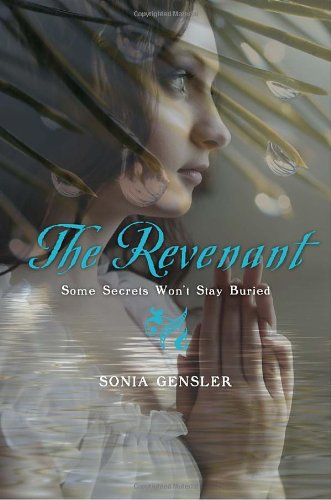
I sort of thing you should buy this one for Halloween based on the cover alone.
If that's not enough for you, how about this: ghosts, revenge, death. There. Go buy it for Halloween.
This is another one that's not a typical Halloween book--but there are ghosts--or at least the fear of them--and what I like is that this book also combines history, race, and relationships in with the ghost story.
What spooky reads are you checking out this Halloween?
Also--a little bit of a self plug, but I'm giving away 19 signed YA books here to prep for the next holiday--Thanksgiving!
Adding Suspense To Your Post-Apocoalyptic (or any!) Novel
Okay, so adding suspense to a novel is difficult business. And as science fiction and dystopian authors have a little bonus--they can use their sometimes scary and tense societies to build suspense. (There is the added drawback of having to develop and explain such societies too, so we don't have it totally easy!)
Here are a few tips for adding suspense to any novel, science fiction or not.
1. Chapter endings. Now I've heard people say to end them on a cliffhanger, but I actually don't think that's entirely true. You don't have to have an explosion at the end of every chapter, or a gun going off for it to be impactful.
The best advice I've heard is to end the chapter in one of two ways: a high or a low. And it can be a plot high or low, or an emotional high or low. Both bring the urge to turn the page, and build the tension for the next chapter.
Some examples:
 Plot high, from THE GIRL OF FIRE AND THORNS by Rae Carson: "I gaze unbelieving at my nurse, amazed at the speed with which she moved, wondering why recognizing the life in my navel would sentence a man to death."
 Emotional low from VIRTUOSITY by Jessica Martinez: "The black night, white stars, and yellow house lights glimmered like fractured glass, poised above me and ready to fall with one more shake of the kaleidoscope."
Notice I didn't have to use sci fi/dystopian titles for the examples. Any reading you do, identify the high/low at the end of the chapter. Use what works for you.
2. Shorter sentences. When I'm building up to a reveal, or writing a particularly fast-paced scene, I like to use shorter sentences or paragraphs. I find myself using repeats and echoes a lot, as I think this draws out the tension before the big reveal.
The white space allows breathing room, and the shortness of the text means the reader can read really fast.
All of that adds to the tension of the reading experience, in my opinion.
3. Evil villains. I think one of the reasons Harry Potter was so engaging is because Lord Voldemort is truly evil. He's scary whether he's on the page or not. I think every book can be benefitted from having a really evil villain.
Of course, if you're not writing fantasy or science fiction, there often is no huge, overarching villain. In cases like these (see VIRTUOSITY example above), rely on the emotional impact of your story.
What techniques do you use to add suspense to your novel?
Here are a few tips for adding suspense to any novel, science fiction or not.
1. Chapter endings. Now I've heard people say to end them on a cliffhanger, but I actually don't think that's entirely true. You don't have to have an explosion at the end of every chapter, or a gun going off for it to be impactful.
The best advice I've heard is to end the chapter in one of two ways: a high or a low. And it can be a plot high or low, or an emotional high or low. Both bring the urge to turn the page, and build the tension for the next chapter.
Some examples:


Notice I didn't have to use sci fi/dystopian titles for the examples. Any reading you do, identify the high/low at the end of the chapter. Use what works for you.
2. Shorter sentences. When I'm building up to a reveal, or writing a particularly fast-paced scene, I like to use shorter sentences or paragraphs. I find myself using repeats and echoes a lot, as I think this draws out the tension before the big reveal.
The white space allows breathing room, and the shortness of the text means the reader can read really fast.
All of that adds to the tension of the reading experience, in my opinion.
3. Evil villains. I think one of the reasons Harry Potter was so engaging is because Lord Voldemort is truly evil. He's scary whether he's on the page or not. I think every book can be benefitted from having a really evil villain.
Of course, if you're not writing fantasy or science fiction, there often is no huge, overarching villain. In cases like these (see VIRTUOSITY example above), rely on the emotional impact of your story.
What techniques do you use to add suspense to your novel?
Top 10 Scary Movie Futures
Forget vampires, werewolves, and crazy guys with a saw fetish. What could be scarier than a bleak and/or twisted future? Here’s some of my faves—in rough order of livability.
 Idiocracy (2006)
The dumb inherit the Earth.
Private Joe Bauers, the definition of "average American", is selected by the Pentagon to be the guinea pig for a top-secret hibernation program. Forgotten, he awakes 500 years in the future. He discovers a society so incredibly dumbed-down that he's easily the most intelligent person alive. (Source: IMDb)
 Blade Runner (1982)
Ridley Scott’s vision of Phillip K. Dick’s story is a bleak, noir-ish world.
Deckard, a blade runner, has to track down and terminate 4 replicants who hijacked a ship in space and have returned to earth seeking their maker. (Source: IMDb)

Brazil (1985)
On the other hand, Terry Gilliam’s world is delightfully bizarre but an administrative nightmare.
A bureaucrat in a retro-future world tries to correct an administrative error and himself becomes an enemy of the state. (Source: IMDb)

Dark City (1998)
The IMDb blurb describes this fantastically dark vision pretty well:
A man struggles with memories of his past, including a wife he cannot remember, in a nightmarish world with no sun and run by beings with telekinetic powers who seek the souls of humans. (Source: IMDb)

Soylent Green (1973)
It’s people.
In an overpopulated futuristic Earth, a New York police detective finds himself marked for murder by government agents when he gets too close to a bizarre state secret involving the origins of a revolutionary and needed new foodstuff. (Source: IMDb)

Children of Men (2006)
The children won’t inherit the Earth if they’re not being born.
In 2027, in a chaotic world in which humans can no longer procreate, a former activist agrees to help transport a miraculously pregnant woman to a sanctuary at sea, where her child's birth may help scientists save the future of humankind. (Source: IMDb)

Handmaid’s Tale (1990)
Right-wingers take over—and they’re having trouble procreating, too.
In a dystopicly polluted rightwing religious tyranny, a young woman is put in sexual slavery on account of her now rare fertility. (Source: IMDb)
 Twelve Monkeys (1995)
We’re all living underground because of Brad Pitt. (Actually, it was the other guy, the one from St. Elsewhere.)
In a future world devastated by disease, a convict is sent back in time to gather information about the man-made virus that wiped out most of the human population on the planet. (Source: IMDb)

Matrix (1999)
We’re basically batteries with a fulfilling fantasy life.
A computer hacker learns from mysterious rebels about the true nature of his reality and his role in the war against its controllers. (Source: IMDb)

Zombieland (2009)
There’s just Woody Harrelson and bunch of zombies left. Rule 1: Cardio.
A shy student trying to reach his family in Ohio, and a gun-toting tough guy trying to find the Last Twinkie and a pair of sisters trying to get to an amusement park join forces to travel across a zombie-filled America. (Source: IMDb)

The Road (2009)
Not much of anything left. I haven't actually seen this one, but the book painted the bleakest imaginable future--with only one faint sliver of hope at the end.
A post-apocalyptic tale of a man and his son trying to survive by any means possible. (Source: IMDb)
Also rans:

The dumb inherit the Earth.
Private Joe Bauers, the definition of "average American", is selected by the Pentagon to be the guinea pig for a top-secret hibernation program. Forgotten, he awakes 500 years in the future. He discovers a society so incredibly dumbed-down that he's easily the most intelligent person alive. (Source: IMDb)

Ridley Scott’s vision of Phillip K. Dick’s story is a bleak, noir-ish world.
Deckard, a blade runner, has to track down and terminate 4 replicants who hijacked a ship in space and have returned to earth seeking their maker. (Source: IMDb)

Brazil (1985)
On the other hand, Terry Gilliam’s world is delightfully bizarre but an administrative nightmare.
A bureaucrat in a retro-future world tries to correct an administrative error and himself becomes an enemy of the state. (Source: IMDb)

Dark City (1998)
The IMDb blurb describes this fantastically dark vision pretty well:
A man struggles with memories of his past, including a wife he cannot remember, in a nightmarish world with no sun and run by beings with telekinetic powers who seek the souls of humans. (Source: IMDb)

Soylent Green (1973)
It’s people.
In an overpopulated futuristic Earth, a New York police detective finds himself marked for murder by government agents when he gets too close to a bizarre state secret involving the origins of a revolutionary and needed new foodstuff. (Source: IMDb)

Children of Men (2006)
The children won’t inherit the Earth if they’re not being born.
In 2027, in a chaotic world in which humans can no longer procreate, a former activist agrees to help transport a miraculously pregnant woman to a sanctuary at sea, where her child's birth may help scientists save the future of humankind. (Source: IMDb)

Handmaid’s Tale (1990)
Right-wingers take over—and they’re having trouble procreating, too.
In a dystopicly polluted rightwing religious tyranny, a young woman is put in sexual slavery on account of her now rare fertility. (Source: IMDb)

We’re all living underground because of Brad Pitt. (Actually, it was the other guy, the one from St. Elsewhere.)
In a future world devastated by disease, a convict is sent back in time to gather information about the man-made virus that wiped out most of the human population on the planet. (Source: IMDb)

Matrix (1999)
We’re basically batteries with a fulfilling fantasy life.
A computer hacker learns from mysterious rebels about the true nature of his reality and his role in the war against its controllers. (Source: IMDb)

Zombieland (2009)
There’s just Woody Harrelson and bunch of zombies left. Rule 1: Cardio.
A shy student trying to reach his family in Ohio, and a gun-toting tough guy trying to find the Last Twinkie and a pair of sisters trying to get to an amusement park join forces to travel across a zombie-filled America. (Source: IMDb)

The Road (2009)
Not much of anything left. I haven't actually seen this one, but the book painted the bleakest imaginable future--with only one faint sliver of hope at the end.
A post-apocalyptic tale of a man and his son trying to survive by any means possible. (Source: IMDb)
Also rans:
- The Day After Tomorrow
- I am Legend / Omega Man
- 1984
- Brave New World
- Planet of the Apes
- Boy and His Dog
- The Day After
- Road Warrior
- Minority Report
- Metropolis
- The Day After
101 Uses for a Brick (Or a Ghost)
Hi all! I'm coming off a pretty intense few days of book events and have now caught myself a bit of a cold. But before I finish up my tea and put myself to bed I wanted to put together a short Halloween related post.
If you haven't seen it yet, Nova Ren Suma (Imaginary Girls) is doing a great series of Halloween themed posts on her blog. Mine will be up there later today. By all means give it a gander. But I also wanted to talk about one of the other posts in this series that went up last week. Nina LaCour (Hold Still) wrote up an awesome true life ghost story that, in addition to being supremely creepy, illustrates an important writing principal.
From here on out there are going to be SPOILERS so before we go any further, read the whole story. Don't worry it's short. I'll wait....
Read it?
Ok. Wow, spooky right? A few nights after I read this I flew into Los Angeles late at night and as soon as I got myself settled into my big empty hotel room this story came rushing back to mind and I got properly freaked out.
Now about the writing principle I think this illustrates. For me, this story works so well because of the twist at the end, where Nina theorizes that it wasn't some kind of ghost taking the pictures but the girl herself waking up in the middle of the night as this malevolent "other person" and taking the pictures. There's just something so chilling and unexpected about that interpretation. That there's this other person living inside you that lives to terrify and undermine you. Nina could have easily left this story as just a creepy occurrence, maybe it's a ghost, maybe not, and it would have worked perfectly fine. That she takes this extra step to come up with a novel interpretation of the event is really what does it for me.
One standard test of creativity is to ask someone to list as many different uses for a brick as they possibly can. You know, you can hold a door open with it, you can crack a walnut with it etc etc. Generally when people do this the first few uses they come up with are the most obvious ones and then the longer they go the more outlandish and surprising the uses get. The idea is the more credible uses you can come up with for a brick the more creative you are. To me, this is what LaCour did so well with this story. She didn't stop at the most obvious explanation for the occurrence, a ghost, she kept going until she found something that had the shock of surprise. She found a new use for a brick.
This is something I'm trying to keep in mind as I work on my new book. If a character needs to get out of a tight spot, I don't want to stop with the first gambit that comes to mind, I want to come up with as many options as possible and pick one that feels fresh and surprising. It's the same thing when it comes to interpreting a character's behavior, or exploring their point of view, or describing a feeling or an image.
Our first idea is not always the best, often it's simply the most conventional, but if we keep pushing we can get somewhere really surprising and, in this case, scare the hell out of people.
What about you all? Do you make a point to push past your first ideas and find new ones?
If you haven't seen it yet, Nova Ren Suma (Imaginary Girls) is doing a great series of Halloween themed posts on her blog. Mine will be up there later today. By all means give it a gander. But I also wanted to talk about one of the other posts in this series that went up last week. Nina LaCour (Hold Still) wrote up an awesome true life ghost story that, in addition to being supremely creepy, illustrates an important writing principal.
From here on out there are going to be SPOILERS so before we go any further, read the whole story. Don't worry it's short. I'll wait....
Read it?
Ok. Wow, spooky right? A few nights after I read this I flew into Los Angeles late at night and as soon as I got myself settled into my big empty hotel room this story came rushing back to mind and I got properly freaked out.
Now about the writing principle I think this illustrates. For me, this story works so well because of the twist at the end, where Nina theorizes that it wasn't some kind of ghost taking the pictures but the girl herself waking up in the middle of the night as this malevolent "other person" and taking the pictures. There's just something so chilling and unexpected about that interpretation. That there's this other person living inside you that lives to terrify and undermine you. Nina could have easily left this story as just a creepy occurrence, maybe it's a ghost, maybe not, and it would have worked perfectly fine. That she takes this extra step to come up with a novel interpretation of the event is really what does it for me.
One standard test of creativity is to ask someone to list as many different uses for a brick as they possibly can. You know, you can hold a door open with it, you can crack a walnut with it etc etc. Generally when people do this the first few uses they come up with are the most obvious ones and then the longer they go the more outlandish and surprising the uses get. The idea is the more credible uses you can come up with for a brick the more creative you are. To me, this is what LaCour did so well with this story. She didn't stop at the most obvious explanation for the occurrence, a ghost, she kept going until she found something that had the shock of surprise. She found a new use for a brick.
This is something I'm trying to keep in mind as I work on my new book. If a character needs to get out of a tight spot, I don't want to stop with the first gambit that comes to mind, I want to come up with as many options as possible and pick one that feels fresh and surprising. It's the same thing when it comes to interpreting a character's behavior, or exploring their point of view, or describing a feeling or an image.
Our first idea is not always the best, often it's simply the most conventional, but if we keep pushing we can get somewhere really surprising and, in this case, scare the hell out of people.
What about you all? Do you make a point to push past your first ideas and find new ones?
Subscribe to:
Posts (Atom)
